Erectile dysfunction is not a single condition — it is a symptom with many different causes that change significantly depending on your age. Understanding what is actually driving your ED is the first step to finding the right treatment.
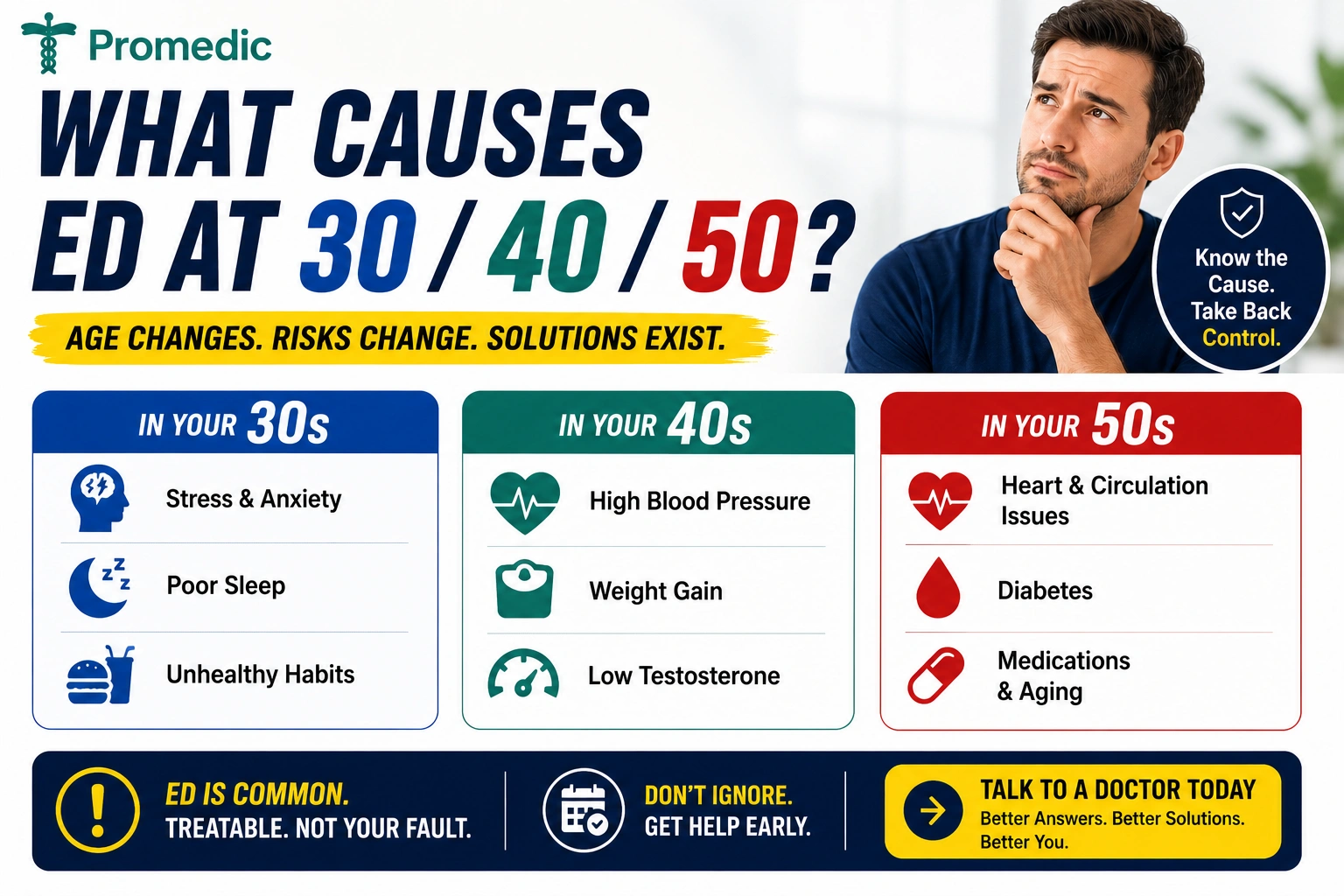
Erectile Dysfunction at 30
In men under 35, physical causes are relatively uncommon. The most frequent drivers are:
- Performance anxiety — fear of failure creates a self-reinforcing cycle. See our full guide on stress, anxiety, and ED
- Relationship issues — unresolved conflict or early relationship nerves
- Heavy alcohol or recreational drug use — both suppress sexual function
- Depression — strongly associated with ED; many antidepressants also cause ED as a side effect
The full guide to ED in young men covers psychological and physical factors in greater depth.
Erectile Dysfunction at 40
By your 40s, physical factors begin to play a more prominent role:
- Early cardiovascular disease — high cholesterol, blood pressure, and early atherosclerosis reduce blood flow. The American Heart Association identifies ED as an early cardiovascular marker
- Type 2 diabetes — often undiagnosed at this age; ED can be the first sign. See our article on ED and diabetes
- Declining testosterone — peaks in early 20s and declines gradually thereafter
- Weight gain and sedentary lifestyle — obesity worsens both vascular health and testosterone levels
Erectile Dysfunction at 50
In men over 50, physical causes are usually dominant. Prevalence rises from ~12% at age 40 to over 40% by 60-70, per the NIDDK. Key contributors:
- Established cardiovascular disease — arterial stiffness and plaque significantly reduce penile blood flow
- Hypogonadism (low testosterone) — ~1 in 5 men over 50 have clinically low testosterone
- Benign prostatic hyperplasia (BPH) — affects sexual function directly and through medications used to treat it
- Prostate cancer treatment — surgery, radiotherapy, and hormone therapy can all affect erectile function
Treatment Options at Any Age
Regardless of age, PDE5 inhibitors — Viagra, Cialis, Levitra, and Spedra — are effective for a wide range of ED causes. See our guide on ED medications and heart health for safety considerations. Use our free consultation to find the right option for you.
Find the Right ED Treatment for Your Age
Our pharmacists help match you with the right medication based on your age, health, and lifestyle.
Free ConsultationView ViagraView Cialis